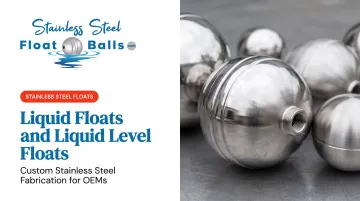
Get the float wrong, though, and the consequences show up fast. A mismatched shape or the wrong material can cause inaccurate readings, premature corrosion, or a pump running dry until it burns out.
This guide breaks down what liquid level floats are, the major types available, where they get used, and how to pick the right one for your specific tank, valve, or sensor system.
Key Takeaways
- Buoyancy and density differences let floats sense or control liquid levels automatically
- Match shape (round or oblong), mechanism (switch, valve, gauge), and material to the job
- Material choice sets corrosion resistance, pressure tolerance, and service life
- Custom configurations handle odd tanks, high pressures, and specialty liquids
What Are Liquid Level Floats and How Do They Work?
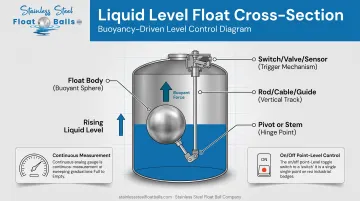
A liquid level float is a buoyant device that rises and falls with the surface of a liquid, triggering a switch, moving a valve, or updating a gauge reading as it travels.
The mechanics come straight from Archimedes. OMEGA's engineering reference defines the working force as net buoyancy: the weight of the liquid a float displaces, minus the float's own weight. That difference is what pushes the float upward and gives it enough force to actuate a mechanism.
A typical float assembly includes:
- Float body - buoyant element shaped for the application
- Rod, cable, or guide - keeps the float on a fixed path
- Pivot or stem - allows controlled motion as levels change
- Switch, valve, or sensor - converts float movement into an action
Floats fall into two broad functional categories:
- Continuous level measurement - sends an ongoing analog or digital reading as the float moves
- On/off (point-level) control - triggers a single action at one set point, such as starting a pump when a tank fills
Design also has to account for the liquid itself. Pressure, temperature, and specific gravity all change how a float performs. A float that works in one tank can fail in another with a heavier or hotter liquid.
Floats are typically pressure-tested to the exact conditions of the system they serve, not against generic figures.
Types of Liquid Floats and Liquid Level Floats
Floats are generally sorted three ways: by shape, by mechanism, and by material. Knowing where a float falls in each category makes it much easier to specify the right one.
Types by Shape
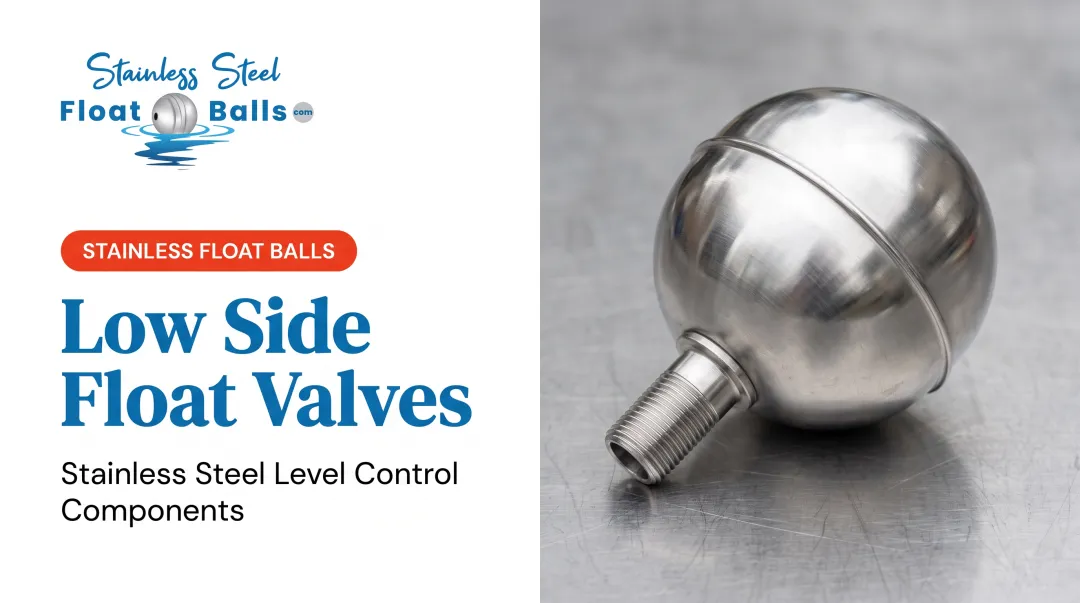
Round float balls are the most common design. Their symmetrical shape gives consistent buoyancy from any orientation, which makes them a solid default choice for general level sensing and valve applications.
Oblong or cylindrical floats work better where vertical space along a rod is tight, or where a specific buoyancy profile is needed as the float travels. They're common in narrow chambers and specialty valve housings where a round ball simply won't fit the geometry.
Types by Mechanism
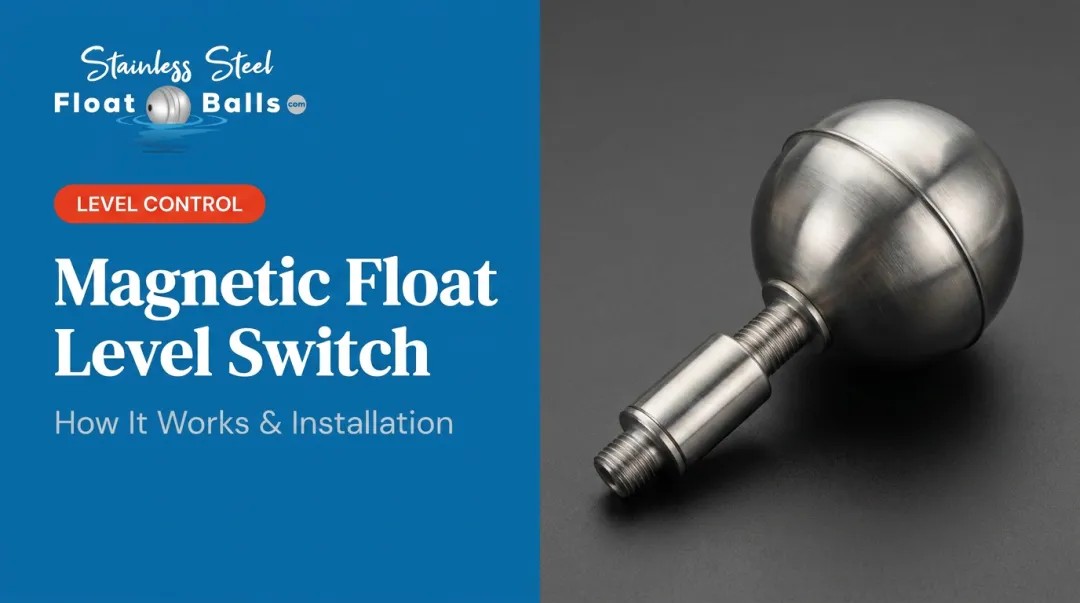
- Float switches use a magnet or a mechanical tilt mechanism to open or close an electrical circuit once the liquid crosses a set level. These are common for alarms and pump protection.
- Float valves mechanically open or close a valve seat to regulate inflow as the liquid level changes. You'll find them in cisterns, tanks, and steam traps.
- Continuous level float gauges connect a float to a sensor or indicator that reports an ongoing reading, not a single trigger point. Use them when operators need to track a trend, not just a threshold.
Types by Material
Material affects weight, chemical resistance, and how long a float survives in service:
- Stainless steel - dense, corrosion-resistant, holds up under pressure and heat
- Plastic/PVC - lightweight and inexpensive, but more vulnerable to UV and chemical degradation
- Foam-filled - buoyant and simple, generally suited to lighter-duty, non-aggressive conditions
Finish and fitting choices matter for integration. Stainless floats are available in matte, brushed, or polished mirror finishes, with threaded, magnetic, or through-tube fittings that drop into an existing valve or sensor system without redesigning the assembly.
Common Applications and Industries That Rely on Liquid Level Floats
Floats show up anywhere a tank, chamber, or line needs automatic level control without constant supervision.
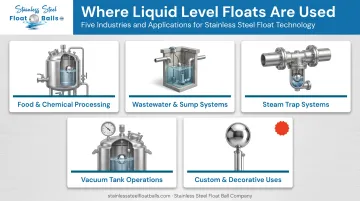
Food processing and chemical manufacturing both depend on floats for tank monitoring. They track levels in vats of oils, syrups, or corrosive process chemicals to prevent overflows and protect pumps from running dry.
Wastewater management and sump systems are among the most documented uses. The EPA's fact sheet on in-plant pump stations identifies float switches as a standard control method for signaling desired wet-well levels. The same principle drives commercial and industrial sump pump float assemblies.
Other applications include:
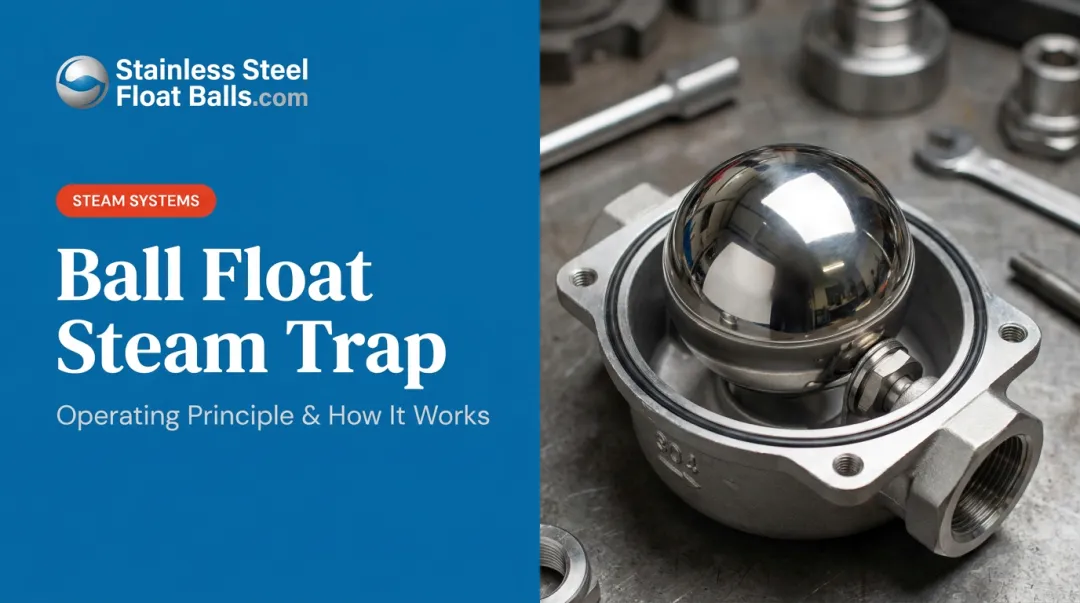
- Steam trap systems, where a sealed float rises with condensate and either triggers or directly forms the valve mechanism
- Vacuum tank operations, where a rising float seals a valve to protect the vacuum pump once liquid reaches a set point
- Flagpole ornaments and custom art projects, where the same durable stainless shapes serve a decorative role
Why Material Matters: Stainless Steel vs. Other Float Materials
Material selection determines how a float holds up against corrosion, especially in systems handling chemicals, saltwater, or high-temperature liquids. Choose poorly, and you get a cracked shell or pitted surface that stops sealing properly—often without much warning.
Plastic floats are lightweight and cost less upfront. But they're also more prone to cracking or degrading under prolonged UV or chemical exposure, which shortens their service life in harsh settings.
Stainless steel floats trade a bit of that upfront cost for durability. The Nickel Institute notes that 316L stainless is more corrosion-resistant than 304L, particularly against chloride-pitting, which matters directly for floats exposed to saltwater or aggressive chemical streams.
That's why stainless steel remains the default choice for demanding industrial environments: it holds up under corrosion and pressure swings, and it outlasts lighter-duty materials in continuous service.
For teams that need those grades in production-ready forms, Stainless Steel Float Ball Company has spent over 20 years manufacturing custom-fabricated 304SS and 316SS float balls in-house:
- Round sizes from 1-1/2" to 14", oblong configurations from 2x6" to 9x14"
- Custom NPT and UNC threading, through-tubes, magnets, and hooks
- Matte, brushed, or fully polished mirror finishes
- Pressure testing built around each customer's actual system requirements
304SS covers most standard applications, while 316SS is typically the better call for corrosive or high-chloride environments like chemical processing or coastal wastewater sites.
A large ready-to-ship inventory covers common sizes for fast turnaround. When a standard float won't fit a unique tank or valve design, new sizes can be added on request so projects aren't stuck waiting on a catalog match.
How to Choose the Right Liquid Level Float for Your System
Selecting a float comes down to matching its specs to your actual operating conditions, not just picking the nearest standard size off a shelf.
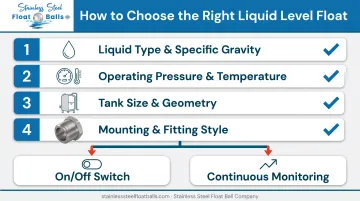
Before ordering, confirm:
- Liquid type and specific gravity — the float must be lighter than the liquid at its lowest expected density, including at operating temperature.
- Operating pressure and temperature — these shift a liquid's specific gravity and can push a float outside its rated envelope.
- Tank size and geometry — determines whether a round ball or an oblong float fits the available space.
- Mounting and fitting style — threaded, magnetic, or through-tube, depending on how the float connects to your existing valve, switch, or gauge.
You'll also need to decide early whether the application calls for a simple on/off switch or continuous level monitoring. That choice drives mechanism selection before you get to shape and material.
When off-the-shelf floats don't match specialized system requirements, work with a supplier that offers tailored supply programs—whether you need lower inventory costs, reduced freight costs, or a custom size fabricated quickly.
Frequently Asked Questions
What are different types of floats?
Floats differ by shape (round or oblong), mechanism (switch, valve, or continuous gauge), and material (stainless steel, plastic, or foam). Choose based on tank geometry, liquid type, and whether you need a single trigger point or ongoing measurement.
How does a liquid level float actually work?
A float rises and falls based on buoyancy, the balance between its own weight and the weight of liquid it displaces. That motion mechanically or magnetically triggers a connected switch, valve, or gauge reading.
What's the difference between a float switch and a float valve?
A float switch triggers an electrical circuit, typically for alarms or pump control. A float valve physically opens or closes a valve seat to regulate liquid flow, with no electrical component involved.
Why choose stainless steel over plastic float balls?
Stainless steel resists corrosion and chloride pitting better than plastic, and it handles higher pressure and temperature in continuous industrial use. Plastic costs less but degrades faster under UV or chemical exposure.
Can liquid level floats be customized for specialty applications?
Yes. Custom sizes, threading (NPT or UNC), through tubes, magnets, and finish options (matte, brushed, or polished) are all available to match unique tank, valve, or sensor requirements.
What size float ball do I need for my tank or system?
Sizing depends on tank dimensions, liquid density, and the buoyant force needed to actuate your specific switch or valve. Share your exact specs with a manufacturer before ordering so the float matches the load and geometry.